
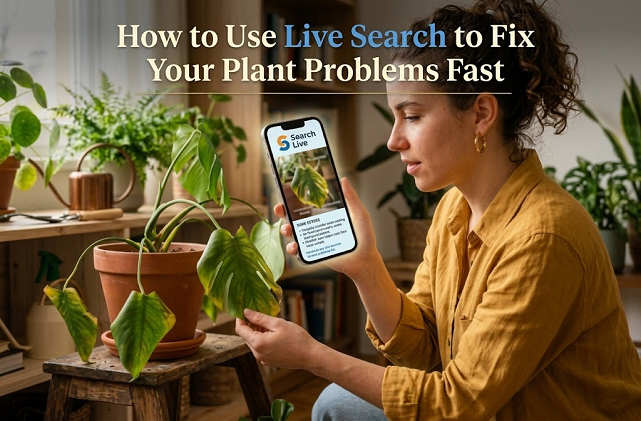
Understanding the Concept of “Search Live” in Plant Care
Your plant’s leaves are turning yellow, and you have no idea why. Searching “tell me how to use search live to fix my plant” usually means you want an answer right now, not after paging through a book. That’s where live tools come in: Google Lens, plant ID apps, and online plant forums. Plants can go downhill fast when pests, overwatering, or missing nutrients are ignored, so speed matters.
The easy way to use them: snap a photo of the sick leaf and upload it to an app or a search engine. In a few seconds you get a list of likely causes and things to try. It beats guessing and hoping.
Accuracy is the other plus. Many of these tools are trained on thousands of plant photos, so they’re usually better than a random guess. Some also connect you with real people, like gardeners, botanists, and hobbyists, who can answer your exact problem.
“Search live” just means using your phone to figure out what’s wrong with a plant while you’re standing in front of it. Apps like Google Lens, PlantNet, and PictureThis can look at a photo and suggest what’s going on, and some AI chat tools can do the same with an image.
It’s different from the old way, where you typed symptoms into a search box and hoped for a match. Now you can:
- Take a photo of the plant
- Upload it right away
- Get suggestions in seconds
That changes how plant care feels. When a plant starts struggling, you don’t have to guess or feel stuck. You can look into it, work out the likely cause, and try a fix before things get worse.
So “tell me how to use search live to fix my plant” is less about convenience and more about acting early, while the plant can still be saved.
Identifying Your Plant Before Fixing It
Before you can fix a plant, you must know what it is. Different plants have different needs, and treating a cactus like a fern will only make things worse. Live search tools make plant identification simple and accessible.
Start by taking a clear photo of your plant—focus on leaves, stems, and any flowers. Upload this image to a plant identification app or use image search. Within moments, you’ll get suggestions about the plant’s species. Once identified, you can look up its specific care requirements, including watering frequency, sunlight needs, and soil type.
This step is critical because many plant problems arise from improper care rather than disease. For example, a plant that needs bright indirect light may suffer if placed in direct sunlight. Without knowing the species, you might misinterpret the symptoms and apply the wrong solution.
Live search also helps verify your plant’s identity by comparing multiple results. If several sources confirm the same plant name, you can be more confident in your diagnosis. Some apps even provide care guides directly after identification, saving you time.
In essence, identifying your plant is like knowing a patient’s medical history before prescribing treatment. It ensures that every step you take afterward is accurate and effective.
Diagnosing Problems Through Visual Search
Once you know your plant, the next step is diagnosing what’s wrong. Visual search tools are incredibly useful for this. By uploading images of affected leaves or stems, you can quickly identify issues such as pests, diseases, or nutrient deficiencies.
For instance, brown spots might indicate fungal infections, while tiny holes could suggest insect damage. Yellowing leaves might be a sign of overwatering or lack of nutrients. Instead of guessing, Tell me how to use search live to fix my plant compares your image with thousands of similar cases and suggests likely causes.
This method is especially helpful for beginners who may not recognize symptoms. Even experienced gardeners can benefit from a second opinion. The key is to upload clear, well-lit images and, if possible, multiple angles. This increases the accuracy of the results.
Additionally, many platforms provide step-by-step solutions once a problem is identified. These solutions often include natural remedies, chemical treatments, and preventive measures.
Using visual search transforms plant care into a data-driven process. It reduces uncertainty and helps you act quickly, which is essential for saving a struggling plant.
Using Forums and Communities for Real-Time Help
Sometimes, AI tools are not enough. This is where live communities come in. Platforms like Reddit, Facebook gardening groups, and plant forums allow you to post your plant’s condition and receive advice from real people.
The advantage of these communities is diversity of experience. You may get responses from hobbyists, professional gardeners, or even botanists. Each person brings a unique perspective, increasing the chances of finding the right solution.
When posting, include clear photos and a detailed description—watering schedule, sunlight exposure, and recent changes. The more information you provide, the better the advice you’ll receive.
Another benefit is follow-up interaction. If a suggested solution doesn’t work, you can update your post and get further guidance. This ongoing conversation is something automated tools cannot provide.
However, not all advice is accurate. It’s important to cross-check suggestions with reliable sources. Still, community input is invaluable for complex or unusual problems.
In short, forums turn plant care into a collaborative effort, giving you access to a global network of knowledge.
Leveraging Video Tutorials for Step-by-Step Fixes
Sometimes, reading instructions is not enough—you need to see the process. Video platforms like YouTube are excellent for this. By searching live for your plant problem, you can find tutorials that demonstrate exactly what to do.
For example, if your plant has root rot, a video can show you how to remove the plant from the pot, trim affected roots, and repot it properly. This visual guidance reduces mistakes and builds confidence.
Videos also help you understand tools and techniques. You can learn how to prune correctly, apply fertilizers, or treat pests. Seeing these actions performed makes it easier to replicate them at home.
Another advantage is accessibility. You can pause, rewind, and rewatch sections as needed. This flexibility ensures you fully understand each step before proceeding.
By combining video tutorials with other Tell me how to use search live to fix my plant tools, you create a comprehensive learning experience. It’s like having a personal instructor guiding you through the process.
Cross-Checking Information for Accuracy
One of the biggest risks of live search is misinformation. Not every result is reliable, so it’s important to verify information before acting on it.
Start by consulting multiple sources. If several websites or experts suggest the same solution, it’s likely accurate. Avoid relying on a single source, especially if it seems unclear or overly simplistic.
Look for credible platforms—university websites, botanical gardens, or well-known gardening experts. These sources are more likely to provide accurate and scientifically backed information.
Also, pay attention to context. A solution that works in one climate may not be suitable for another. For example, watering schedules vary depending on humidity and temperature.
Cross-checking ensures that you don’t harm your plant by following incorrect advice. It adds an extra layer of confidence to your decision-making process.
Applying Solutions Safely and Gradually
Once you’ve identified the problem and verified the solution, it’s time to act. However, it’s important to proceed carefully. Sudden changes can stress your plant further.
For example, if your plant is overwatered, don’t immediately stop watering completely. Instead, adjust gradually and monitor the plant’s response. Similarly, when using fertilizers or pesticides, start with a small amount to avoid damage.
Live search often provides detailed instructions, including dosages and timing. Follow these guidelines closely. If unsure, err on the side of caution.
Keep an eye on your plant after applying the solution. Look for signs of improvement or further decline. This feedback helps you decide whether to continue, adjust, or try a different approach.
Safe and gradual application ensures that your efforts help rather than harm your plant.
Tracking Progress with Ongoing Searches
Fixing a plant is not a one-time task—it’s an ongoing process. Tell me how to use search live to fix my plant can help you track progress and make adjustments as needed.
Take regular photos of your plant and compare them over time. If the condition improves, you’re on the right track. If not, you can search again using updated images and symptoms.
This iterative approach allows you to refine your strategy. It’s similar to a feedback loop where each step informs the next.
Additionally, keeping a record of changes—watering schedule, treatments applied—helps you understand what works and what doesn’t.
By continuously using live search, you stay informed and responsive, increasing the chances of success.
Preventing Future Problems באמצעות Live Search
Prevention is better than cure. Live search is not just for fixing problems—it’s also a powerful tool for preventing them.
You can look up ideal care routines for your plant, including watering frequency, light requirements, and seasonal adjustments. Many platforms provide reminders and tips to keep your plant healthy.
You can also learn about common issues associated with your plant and how to avoid them. For example, knowing that a certain plant is prone to pests allows you to take preventive measures.
By staying proactive, you reduce the likelihood of serious problems. This makes plant care easier and more enjoyable.
Building Confidence and Expertise Over Time
Using live search regularly helps you become a better plant caretaker. Each problem you solve adds to your knowledge and experience.
Over time, you’ll start recognizing symptoms without needing to search. You’ll understand your plant’s needs and respond more intuitively.
Live search becomes a learning tool rather than just a problem-solving method. It empowers you to take control of your plant care journey.
Eventually, you may even start helping others by sharing your knowledge in forums and communities.
In conclusion, live search is a powerful ally in plant care. By using it effectively—identifying plants, diagnosing problems, verifying solutions, and tracking progress—you can transform your approach and ensure your plants thrive.
Conclusion
In conclusion, using Tell me how to use search live to fix my plant to fix your plant is a modern, efficient, and highly practical approach to plant care. It eliminates guesswork and replaces it with informed decision-making by giving you instant access to expert knowledge, visual diagnosis tools, and supportive communities. From identifying your plant to diagnosing issues and applying solutions, each step becomes easier and more accurate with the help of real-time search tools.
Moreover, live search is not just about solving problems—it also helps you learn and grow as a plant caretaker. By continuously researching and tracking your plant’s condition, you develop a deeper understanding of its needs and behaviors. This knowledge allows you to prevent future issues and maintain healthier plants over time.
However, it is important to use live search wisely by cross-checking information and applying solutions carefully. Not all advice is reliable, so critical thinking remains essential.
Ultimately, live search empowers you to take control of your plant care journey. With the right balance of technology and observation, you can turn even a struggling plant into a thriving one, making the entire experience more rewarding and successful.
