

Governments adjust tax rules to keep up with the economy, prices, social spending, and the money they need to collect. In 2026, several countries are said to be rolling out updated tax policies. The stated goals are simpler filing and some relief for middle-income taxpayers, plus getting more people into the tax net through digital filing. As for the slabs themselves, the changes could include a higher exemption limit, a bigger standard deduction, and new rebate rules. Surcharge structures may change too. The idea is that people keep a bit more of their pay, and that extra spending gives the economy a nudge.
If you pay tax as an individual, knowing your slab is what lets you work out how much you owe. It also points you toward the right investment options under the tax-saving sections. Plenty of people end up overpaying or planning badly simply because they never learned how slab rates work. So it’s worth reading up on the latest structure, both for your own finances and to stay on the right side of the rules.
The 2026 changes also reflect what’s happening in the economy: prices going up, living costs climbing, and more of life moving online. Governments are pushing for simpler, more transparent tax systems that make it easier to comply without being chased. Digital filing portals, AI-assisted processing, and pre-filled returns are becoming common.
Below is a sample representation of possible income tax slabs for individuals in 2026.
| Annual Income | Estimated Tax Rate |
|---|---|
| Up to ₹4,00,000 | Nil |
| ₹4,00,001 – ₹8,00,000 | 5% |
| ₹8,00,001 – ₹12,00,000 | 10% |
| ₹12,00,001 – ₹16,00,000 | 15% |
| ₹16,00,001 – ₹20,00,000 | 20% |
| Above ₹20,00,000 | 30% |
These slab rates may vary depending on government policy, age group, and residential status. Individuals should always verify the latest official tax notifications before filing returns.
Importance of Understanding Income Tax Slabs
Income tax slabs determine how much tax an individual must pay based on annual earnings. These slabs are structured progressively, meaning people with higher incomes pay higher tax rates. Understanding these slabs is extremely important because it affects budgeting, investments, and financial planning throughout the year.
The new income tax slab rates individuals slab rates for 2026 are expected to simplify taxation and reduce the burden on lower and middle-income groups. Governments often revise slabs to account for inflation and economic growth. If tax slabs remain unchanged for many years, taxpayers may end up paying higher taxes despite only modest increases in salary. Therefore, periodic revision is necessary to maintain fairness in the taxation system.
Understanding slab rates also helps taxpayers avoid unnecessary financial stress during tax filing season. Many salaried individuals wait until the last moment to calculate their liabilities, which can lead to poor investment decisions. By knowing the applicable slab early, taxpayers can make strategic investments in retirement plans, insurance policies, and government-approved savings schemes.
Another major benefit is legal compliance. Tax evasion can result in penalties, audits, and legal complications. Awareness of slab rates helps taxpayers file accurate returns and maintain proper financial records. In modern economies, digital tax systems are integrated with banking transactions, investment platforms, and salary structures, making transparency more important than ever.
The new tax structure may also encourage consumption and investment. When individuals retain more disposable income, they tend to spend more on goods, education, healthcare, and housing. This contributes positively to economic growth.
Here is a comparison table showing how revised slabs may affect taxpayers:
| Income Level | Old Tax Burden | New Estimated Burden |
|---|---|---|
| ₹5 lakh | Moderate | Lower |
| ₹10 lakh | High | Moderate |
| ₹15 lakh | Higher | Balanced |
| ₹25 lakh | Significant | Slightly Reduced |
Tax literacy is becoming increasingly important in the digital age. Individuals who understand tax slabs can make informed financial decisions and improve wealth management strategies.
Read More: Top 10 Most Successful Businesses to Start in 2026 and Beyond
Key Changes in the 2026 Income Tax Structure
The 2026 income tax reforms are expected to bring several important changes designed to modernize taxation systems and improve taxpayer convenience. Governments across the world are focusing on simplified tax structures that reduce paperwork and encourage transparency. These reforms are likely to benefit salaried individuals, professionals, pensioners, and small business owners.
One of the biggest anticipated changes is the increase in the tax-free income limit. This move aims to provide relief to lower-income groups facing inflation and rising living expenses. By raising the exemption threshold, governments can increase disposable income and support household spending.
Another major reform involves simplified slab structures. Instead of multiple complicated tax brackets, authorities may introduce fewer slabs with clearer percentage divisions. This makes tax calculations easier and reduces filing errors. Many governments are also encouraging taxpayers to adopt new tax regimes that offer lower rates without deductions.
Digital transformation is another key aspect of the 2026 tax system. AI-powered verification systems, online assessment tools, and pre-filled returns are becoming common. Taxpayers may experience faster refunds and reduced manual intervention.
Standard deduction benefits are also expected to rise. Employees and pensioners may receive higher deduction limits to offset professional and living expenses. In addition, tax rebates for middle-income earners may increase, reducing overall liabilities.
The following table highlights possible 2026 changes:
| Feature | Previous System | 2026 Proposed Change |
|---|---|---|
| Tax-Free Limit | ₹3 lakh | ₹4 lakh |
| Standard Deduction | ₹50,000 | ₹75,000 |
| Number of Slabs | Multiple | Simplified |
| Filing Process | Semi-digital | Fully Digital |
| Refund Processing | Weeks | Faster Automation |
The reforms may also emphasize environmental and social goals. Governments may introduce tax benefits for electric vehicle purchases, renewable energy investments, and startup participation.
Overall, the 2026 new income tax slab rates individuals structure aims to balance revenue generation with taxpayer convenience. Simplification, transparency, and digital integration are likely to define the future of personal taxation systems.
Difference Between Old and New Tax Regimes
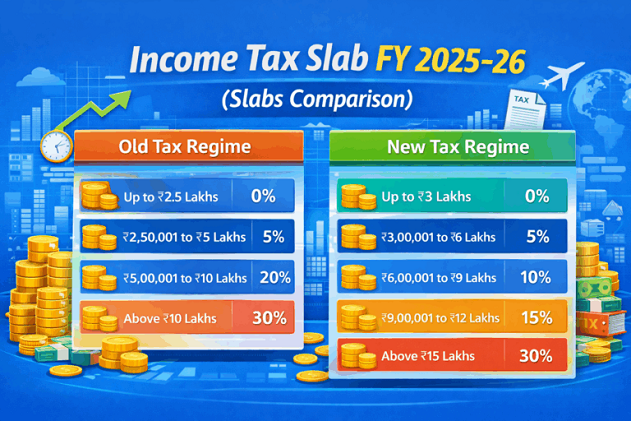
One of the most discussed topics in personal taxation is the difference between old and new tax regimes. In 2026, taxpayers may continue to have the option to choose between the traditional tax system and a simplified alternative regime. Understanding the difference is essential because selecting the wrong regime can increase tax liability unnecessarily.
The old tax regime generally allows taxpayers to claim various deductions and exemptions. These may include deductions for insurance premiums, provident fund contributions, home loan interest, tuition fees, and investments under tax-saving schemes. Although this regime provides numerous tax-saving opportunities, it requires detailed financial planning and documentation.
The new tax regime, on the other hand, offers lower tax rates but eliminates many exemptions and deductions. This system is designed to simplify taxation and reduce paperwork. Individuals who do not invest heavily in tax-saving instruments may benefit more from the new regime.
For salaried employees, the choice between regimes depends on salary structure, investments, and financial goals. Those with significant deductions often prefer the old system, while young professionals with fewer investments may find the new regime more beneficial.
Here is a comparison table:
| Feature | Old Regime | New Regime |
|---|---|---|
| Deductions Allowed | Yes | Limited |
| Tax Rates | Higher | Lower |
| Investment Requirement | Necessary | Optional |
| Complexity | More | Less |
| Suitable For | Investors | Simpler Filing |
The 2026 reforms may further encourage taxpayers to adopt the simplified regime by offering more attractive slab rates. Governments often aim to reduce dependency on exemptions and create a cleaner taxation framework.
However, taxpayers should calculate liabilities under both systems before choosing. Financial advisors and online calculators can help determine the most beneficial option. The right choice depends on personal income patterns, future financial commitments, and investment habits.
Ultimately, both regimes serve different taxpayer categories. The old system rewards disciplined investment behavior, while the new system emphasizes simplicity and reduced compliance burdens.
Impact of New Tax Slabs on Salaried Employees
Salaried employees are among the largest taxpayer groups affected by income tax slab revisions. The new income tax slab rates individuals in 2026 are expected to influence monthly salaries, take-home income, investment planning, and overall financial management for millions of workers.
One major impact will be increased disposable income. If the government raises exemption limits or reduces tax rates, employees may retain a larger portion of their salaries. This additional income can improve spending capacity and support savings goals.
The revised slabs may also reduce the dependence on tax-saving investments. Under older systems, employees often rushed to purchase insurance or investment products merely to reduce taxes. Simpler tax structures may allow individuals to focus on genuine financial planning rather than forced tax-saving behavior.
Human resource departments and payroll systems will also need updates to reflect revised slab structures. Companies may adopt automated salary software that calculates taxes in real time. Employees will benefit from more accurate monthly tax deductions and reduced year-end adjustments.
Here is an example showing estimated effects:
| Annual Salary | Previous Tax | New Estimated Tax |
|---|---|---|
| ₹6 lakh | ₹20,000 | ₹10,000 |
| ₹10 lakh | ₹75,000 | ₹55,000 |
| ₹15 lakh | ₹1,80,000 | ₹1,50,000 |
Young professionals may particularly benefit because they usually have fewer deductions and investments. Lower tax rates under the new regime can help them manage rent, education loans, and living expenses more effectively.
However, high-income salaried employees may still face substantial tax liabilities due to surcharge provisions. Individuals earning above certain thresholds may continue paying additional taxes on higher income portions.
Overall, the 2026 slab reforms are expected to provide relief to employees while simplifying compliance procedures. Better financial awareness and tax planning will remain essential for maximizing benefits under the revised system.
Read More: I’m 25 And Earning ₹30k A Month How Should I Start Investing For Long-Term Growth?
Tax Planning Strategies Under the 2026 Slab Rates
Tax planning is an essential part of financial management. With the introduction of the new income tax slab rates in 2026, individuals must reassess their financial strategies to optimize savings and reduce unnecessary tax burdens. Proper tax planning ensures legal compliance while maximizing long-term wealth creation.
One important strategy is understanding which tax regime is more beneficial. Taxpayers should compare liabilities under both the old and new systems before making a decision. Individuals with large deductions from investments, insurance, or home loans may benefit from the old regime, while others may save more under simplified rates.
Investment diversification is another key strategy. Tax-saving instruments such as provident funds, retirement plans, and government bonds continue to play an important role in financial security. Even if deductions are limited, disciplined investing remains valuable for long-term growth.
Insurance planning is equally important. Life and health insurance policies not only provide protection but may also offer tax advantages. Medical expenses and rising healthcare costs make insurance an essential financial tool.
Below is a table of common tax-saving instruments:
| Investment Option | Potential Benefit |
|---|---|
| Provident Fund | Retirement Savings |
| Health Insurance | Medical Protection |
| Home Loan | Housing Benefits |
| Government Bonds | Stable Returns |
| Pension Schemes | Future Income |
Taxpayers should also maintain proper financial records. Digital filing systems require accurate documentation, including salary slips, bank statements, and investment proofs. Organized records reduce filing errors and speed up refund processing.
Another effective strategy is early tax planning. Waiting until the financial year ends often leads to rushed decisions and poor investments. Monthly planning helps distribute investments more evenly and improves financial discipline.
Professional advice may also be useful for high-income individuals or business owners. Tax consultants can identify legal opportunities for reducing liabilities and ensure compliance with evolving regulations.
Ultimately, tax planning in 2026 should focus on balancing savings, investments, and financial security rather than merely minimizing taxes.
Benefits for Senior Citizens and Pensioners
Senior citizens and pensioners are often given special consideration in income tax systems because many depend on fixed incomes after retirement. The new income tax slab rates individuals in 2026 are expected to provide additional relief and financial stability to elderly taxpayers.
One of the most significant benefits may be higher exemption limits for senior citizens. Governments recognize that retirees face healthcare costs and inflation pressures without regular salary growth. Increasing the tax-free income threshold can help pensioners maintain a comfortable lifestyle.
Healthcare-related deductions may also expand. Medical expenses typically rise with age, and tax benefits on health insurance premiums or treatment costs can significantly reduce financial burdens. Pensioners may also receive simplified filing procedures to improve accessibility.
Another important advantage is the reduction in compliance requirements. Many elderly individuals struggle with complicated digital tax systems. Governments may introduce easier filing interfaces, assisted tax centers, or automatic pension reporting systems.
The following table highlights potential benefits:
| Benefit Type | Possible 2026 Advantage |
|---|---|
| Higher Exemption Limit | Reduced Tax Burden |
| Medical Deductions | Lower Healthcare Costs |
| Simplified Filing | Easier Compliance |
| Pension Relief | Better Financial Security |
Retirees with interest income from savings deposits may also receive special deductions. Fixed deposits and savings accounts remain popular among senior citizens because they provide stable returns with lower risk.
However, pensioners should still engage in proper tax planning. Many retirees have multiple income sources, including pensions, rental income, investments, and interest earnings. Understanding applicable slabs helps avoid penalties and ensures smooth filing.
Overall, the 2026 tax reforms aim to improve financial dignity and stability for senior citizens. Reduced taxes and simplified systems can help retirees focus on health, family, and personal well-being during retirement years.
Role of Technology in Modern Tax Systems
Technology is transforming tax administration systems across the world. The 2026 income tax framework is expected to rely heavily on digital tools, artificial intelligence, and automated compliance systems to improve efficiency and transparency.
Online tax filing portals have already simplified return submissions for millions of taxpayers. In 2026, governments may introduce even more advanced systems with pre-filled forms, AI-powered verification, and instant refund tracking. These innovations reduce manual errors and improve processing speed.
Digital tax systems also increase transparency. Banking transactions, salary payments, investment records, and property purchases can now be integrated with tax databases. This helps governments detect fraud and improve revenue collection.
Artificial intelligence may play a larger role in risk assessment and compliance monitoring. AI tools can identify suspicious transactions and assist taxpayers with automated guidance during filing procedures.
Here is a table showing technological advancements:
| Technology | Benefit |
|---|---|
| AI Verification | Error Detection |
| Online Filing | Faster Submission |
| Digital Records | Better Transparency |
| Automated Refunds | Reduced Waiting Time |
| Mobile Tax Apps | Convenient Access |
Mobile applications are also becoming popular. Taxpayers can calculate liabilities, upload documents, and track refunds directly from smartphones. This is particularly useful for younger individuals and remote workers.
Cybersecurity remains an important concern. Governments must ensure strong data protection systems because tax databases contain sensitive financial information. Multi-factor authentication and encryption technologies are likely to become standard features.
Technology also supports environmental sustainability by reducing paper usage and physical office visits. Fully digital systems lower administrative costs while improving taxpayer convenience.
The modernization of tax systems reflects broader economic digitization trends. As governments continue integrating technology into taxation, taxpayers must adapt to digital financial management practices and maintain accurate electronic records.
Read More: Teach Me the Basics of How to Start Investing in Index Funds A Complete Step-by-Step Guide
Challenges Faced by Taxpayers in 2026
Despite the advantages of revised tax systems, taxpayers may still face several challenges in 2026. Understanding these difficulties is important for improving financial planning and ensuring compliance with tax regulations.
One common challenge is confusion between old and new tax regimes. Many individuals struggle to determine which option offers greater savings. Without proper guidance, taxpayers may choose unsuitable systems that increase liabilities.
Another issue is frequent policy changes. Governments sometimes revise tax rules, deductions, and filing procedures annually. Keeping track of these updates can be difficult, especially for salaried employees and small business owners.
Digital filing systems, while convenient, may also create accessibility challenges for older citizens or people with limited technological knowledge. Technical errors, login problems, and documentation issues can delay return submissions.
Below is a table summarizing common taxpayer challenges:
| Challenge | Impact |
|---|---|
| Complex Rules | Filing Confusion |
| Digital Literacy Issues | Compliance Difficulty |
| Policy Changes | Uncertainty |
| Documentation Errors | Penalties |
| Fraud Risks | Financial Loss |
Cybersecurity threats are another growing concern. Fake tax refund messages, phishing scams, and fraudulent portals can target taxpayers during filing seasons. Individuals must verify official platforms before sharing personal information.
High-income taxpayers may also face surcharge complexities and additional reporting requirements. Investment income, foreign assets, and cryptocurrency holdings can complicate tax calculations.
Inflation presents another indirect challenge. Even with revised slab rates, rising living costs may reduce the real benefit of tax relief measures.
Financial education is essential for overcoming these problems. Governments, employers, and financial institutions should provide awareness programs to improve taxpayer understanding and encourage responsible compliance practices.
Overall, while the 2026 tax reforms aim to simplify taxation, continuous learning and proper financial planning remain critical for successful tax management.
Future of Individual Taxation Beyond 2026
The future of individual taxation is expected to evolve significantly beyond 2026. Governments worldwide are increasingly focusing on transparency, digital transformation, sustainability, and economic inclusiveness in designing tax systems.
One likely trend is the continued simplification of tax structures. Complex deduction-heavy systems may gradually be replaced by cleaner and lower-rate frameworks. Governments prefer systems that reduce administrative costs and improve compliance rates.
Artificial intelligence and automation will become central to taxation processes. Future systems may automatically calculate taxes based on real-time income data, reducing the need for manual filing. Taxpayers could receive instant assessments and refunds through integrated digital platforms.
Environmental taxation is also expected to grow. Governments may provide incentives for eco-friendly behavior such as electric vehicle adoption, renewable energy investments, and sustainable housing. Green taxation policies can encourage responsible environmental practices while generating public revenue.
Here is a projection table for future taxation trends:
| Future Trend | Expected Impact |
|---|---|
| AI-Based Filing | Faster Processing |
| Simplified Slabs | Easier Compliance |
| Green Tax Incentives | Sustainable Growth |
| Real-Time Taxation | Improved Transparency |
| Global Reporting Standards | Better Monitoring |
International cooperation on taxation may also increase. Cross-border digital transactions and remote work arrangements require governments to coordinate tax policies more effectively.
Cryptocurrency and digital asset taxation will likely become more structured. Governments are gradually developing frameworks to regulate digital investments and ensure proper reporting.
Financial literacy will remain essential in the future tax environment. Individuals who understand evolving tax systems can make better decisions regarding investments, savings, and retirement planning.
The future of taxation is not only about revenue collection but also about creating balanced economic systems that support innovation, social welfare, and sustainable development. The 2026 reforms represent an important step toward that broader transformation.
(FAQ)
What are the new income tax slab rates individuals in 2026?
The new income tax slab rates for 2026 are expected to provide simplified taxation with revised tax brackets and lower tax burdens for middle-income earners. The exact slab rates may vary depending on government policy updates and whether the taxpayer chooses the old or new tax regime.
| Annual Income | Expected Tax Rate |
|---|---|
| Up to ₹4,00,000 | Nil |
| ₹4,00,001 – ₹8,00,000 | 5% |
| ₹8,00,001 – ₹12,00,000 | 10% |
| ₹12,00,001 – ₹16,00,000 | 15% |
| ₹16,00,001 – ₹20,00,000 | 20% |
| Above ₹20,00,000 | 30% |
What is the difference between the old and new tax regime?
The old tax regime allows taxpayers to claim deductions and exemptions such as insurance, provident funds, and home loan benefits. The new regime offers lower tax rates but removes most deductions, making filing simpler.
| Feature | Old Regime | New Regime |
|---|---|---|
| Deductions | Available | Limited |
| Tax Rates | Higher | Lower |
| Complexity | More | Less |
| Suitable For | Investors | Simpler Filing |
Who benefits the most from the 2026 tax slab changes?
Middle-class salaried employees, young professionals, pensioners, and individuals with lower investment deductions are likely to benefit the most. Increased exemption limits and simplified slabs may reduce overall tax liabilities.
Is it mandatory to switch to the new tax regime in 2026?
No, taxpayers are generally expected to have the option to choose between the old and new tax regimes. Individuals should compare tax liabilities under both systems before selecting the most beneficial option.
Will senior citizens receive special tax benefits in 2026?
Yes, senior citizens may continue receiving higher exemption limits, healthcare-related deductions, and simplified filing benefits. Governments often provide additional relief measures for retirees and pensioners.
How can I reduce my income tax legally?
Taxpayers can reduce taxes legally through proper tax planning, investments in eligible savings schemes, insurance policies, retirement funds, and home loan benefits under applicable regulations.
Will tax filing become fully digital in 2026?
Most governments are moving toward fully digital tax systems with online filing portals, AI-assisted verification, automated refunds, and pre-filled returns to simplify compliance procedures.
Why are income tax slabs revised regularly?
Tax slabs are revised to account for inflation, economic growth, rising living costs, and changing government revenue requirements. Regular updates help maintain fairness in the taxation system.
Conclusion
The new income tax slab rates individuals in 2026 represent a major step toward simplifying taxation and improving financial relief for taxpayers. Revised slabs, higher exemption limits, digital filing systems, and streamlined tax regimes are expected to make the tax process more transparent and efficient. These reforms aim to increase disposable income, encourage compliance, and support economic growth.
For salaried employees, pensioners, freelancers, and business owners, understanding the latest slab structure is essential for effective financial planning. Choosing the right tax regime, maintaining proper documentation, and investing wisely can significantly reduce tax burdens while improving long-term financial security.
The increasing use of technology in taxation will further transform how individuals file returns and manage tax obligations. AI-driven systems, online portals, and automated refund processes are making taxation faster and more convenient than ever before. However, taxpayers must stay informed about policy changes and continue practicing responsible financial management.
