
Technology has become one of the strongest forces shaping modern life. From the smartphone in our pocket to cloud platforms, artificial intelligence, digital payments, smart devices, and online services, technology now influences almost every part of our daily routine. In this fast-moving environment, platforms and concepts such as TechHopes represent an interest in understanding where technology is heading and how new digital developments can affect ordinary users.
The interesting thing about technology is that it does not remain fixed for long. A product that feels revolutionary today can become ordinary within a few years. New software, devices, platforms, and digital services continue to appear, creating both opportunities and challenges for users.
Tech Hopes can therefore be viewed as a technology-focused concept centered around curiosity, innovation, digital awareness, and the future of technology. Instead of looking at technology only as a collection of gadgets, it is more useful to consider how technological changes influence businesses, students, professionals, creators, and everyday consumers.
This article explores the broader idea behind TechHopes, including emerging technologies, AI, smartphones, cybersecurity, digital lifestyles, online businesses, and the future direction of the technology industry.
What Is TechHopes and Why Does the Concept Matter?
The name TechHopes naturally brings together two ideas: technology and hopes for the future. Technology is already transforming the present, but the bigger question is what it can accomplish tomorrow. This is where the idea becomes interesting. People are no longer interested only in knowing what a new device can do; they also want to understand how technology might change work, communication, education, entertainment, and business.
A technology-oriented platform or concept can help users stay aware of these changes without making every topic unnecessarily complicated. The technology industry produces an enormous amount of information every day. New processors are launched, applications receive updates, artificial intelligence tools become more capable, and companies constantly introduce new digital services.
For ordinary users, keeping up with everything can be difficult. A useful technology resource should therefore focus on explaining developments in a straightforward way.
Tech Hopes can also represent a mindset. It suggests being optimistic about innovation while remaining practical about its limitations. Technology can solve problems, save time, improve access to information, and create new opportunities. At the same time, users need to understand privacy risks, misinformation, security threats, and the costs associated with constantly upgrading technology.
That balanced perspective makes technology discussions more useful. The goal should not simply be to praise every new invention. Instead, it should be about understanding which innovations actually make life better and why they matter.
Read More: Techslassh.com – Future of Technology 2026
TechHopes and the Rise of Artificial Intelligence
Artificial intelligence has moved from being a futuristic concept to becoming part of everyday digital life. AI-powered tools are now being used for writing, image generation, translation, customer service, coding, data analysis, education, and many other tasks.
This makes AI one of the most important subjects for any technology-focused platform. The interesting part is that AI is not limited to large technology companies anymore. Students, freelancers, small businesses, creators, and ordinary internet users can access AI-powered applications.
TechHopes can therefore provide a useful perspective by focusing on the practical side of AI rather than simply discussing technical terminology. Most users want to know what a particular AI tool can actually do for them. They may want to write content faster, organize information, create graphics, learn a skill, analyze data, or automate repetitive tasks.
However, the growth of AI also creates questions about accuracy, privacy, copyright, employment, and responsible use. AI-generated information can sometimes contain mistakes, so users should not automatically assume that every generated answer is correct.
The future will probably involve greater cooperation between people and AI rather than a simple replacement of humans. Human judgment, creativity, experience, and decision-making will remain important.
| AI Area | Potential Benefit | Important Consideration |
|---|---|---|
| Content creation | Faster drafting | Human editing is still important |
| Education | Personalized learning | Information should be verified |
| Business | Automation | Privacy and security matter |
| Design | Faster visual creation | Originality remains important |
| Coding | Development assistance | Code requires testing |
The most valuable AI knowledge is therefore practical knowledge: knowing when to use AI, how to use it responsibly, and when human judgment should take priority.
Smartphones Are Still at the Center of Digital Life
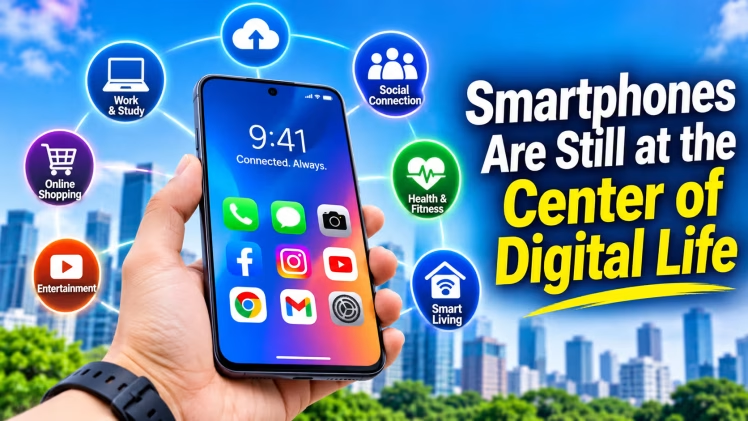
Despite the growth of laptops, tablets, smartwatches, and other connected devices, smartphones remain one of the most important pieces of technology in everyday life. A modern phone is much more than a communication device. It can function as a camera, payment tool, entertainment system, navigation device, learning platform, workplace assistant, and social connection.
For a technology-focused concept such as Tech Hopes, smartphones naturally become an important area of discussion. Users are interested in processor performance, camera quality, battery life, display technology, software updates, storage, connectivity, and price.
But specifications alone do not tell the whole story. Two smartphones can have similar specifications while offering completely different experiences. Software optimization, long-term updates, battery efficiency, build quality, and reliability can matter just as much as headline specifications.
Consumers are also becoming more careful about value. Instead of simply buying the newest model, many people now compare whether an upgrade is genuinely worthwhile.
A practical technology article should therefore answer questions such as: Is the phone suitable for gaming? Is the camera useful in real-world conditions? Will the battery last through a full day? How long will software support continue? Does the price make sense compared with competing devices?
That approach is more helpful than simply repeating manufacturer specifications.
What Users Commonly Compare
| Smartphone Feature | Why It Matters |
|---|---|
| Processor | Performance and efficiency |
| Battery | Daily usage and charging frequency |
| Camera | Photography and video quality |
| Display | Viewing and gaming experience |
| Software | Features, stability and security |
| Storage | Apps, photos and videos |
| Connectivity | Mobile networks and wireless features |
Technology becomes meaningful when specifications are connected to real-life use.
The Role of Emerging Technology in Everyday Life
Emerging technology often sounds complicated because new concepts arrive with unfamiliar names. However, many of these technologies eventually become ordinary parts of daily life.
Cloud computing is a good example. People may not think about cloud infrastructure when saving photographs, watching online videos, using productivity software, or accessing files from multiple devices. Yet cloud technology supports many of these experiences.
Similarly, the Internet of Things is gradually connecting household devices, vehicles, wearable technology, security systems, and other equipment. Smart technology can make everyday tasks more convenient, but it also creates questions about data collection and security.
Other areas such as robotics, advanced connectivity, augmented reality, virtual reality, edge computing, and automation are also developing rapidly.
A technology-focused platform can help users understand these trends by explaining them through practical examples. Instead of saying that edge computing is transforming digital infrastructure, for instance, it can explain why processing information closer to the user can reduce delays in certain applications.
This style of explanation makes complicated technology easier to understand.
The most interesting aspect of emerging technology is that its final impact is often difficult to predict. Some innovations receive enormous attention but never become mainstream. Others quietly develop in the background before becoming essential.
That is why technology readers should remain curious without believing every prediction they encounter.
Read More: Kaynes Technology News: Stocks, OSAT & Growth Outlook 2026
TechHopes and the Growing Importance of Cybersecurity
As more activities move online, cybersecurity becomes increasingly important. People store personal photographs, financial information, passwords, documents, messages, and professional data on connected devices and online accounts.
This creates opportunities for cybercriminals. Phishing messages, malicious applications, fake websites, weak passwords, account takeovers, and other threats can affect ordinary users as well as large organizations.
A technology platform should therefore treat cybersecurity as a practical subject rather than something reserved for computer experts.
Simple habits can significantly improve digital safety. Using unique passwords, enabling multi-factor authentication, keeping software updated, checking suspicious links, and avoiding unknown downloads are basic but valuable steps.
Users should also be careful about oversharing personal information online. A seemingly harmless piece of information can sometimes be combined with other publicly available details to create security risks.
| Security Habit | Why It Helps |
|---|---|
| Strong unique passwords | Reduces account compromise risk |
| Multi-factor authentication | Adds another security layer |
| Software updates | Fixes known vulnerabilities |
| Suspicious-link awareness | Helps prevent phishing |
| Secure backups | Protects important files |
| Privacy checks | Limits unnecessary data exposure |
The important lesson is that cybersecurity is not only an IT department’s responsibility. Every internet user has some responsibility for protecting their digital identity.
Tech Hopes, as a technology-oriented concept, can contribute by making security information easier to understand. Good cybersecurity advice should be practical, current, and easy enough for non-technical readers to follow.
How Technology Is Changing the Way People Work
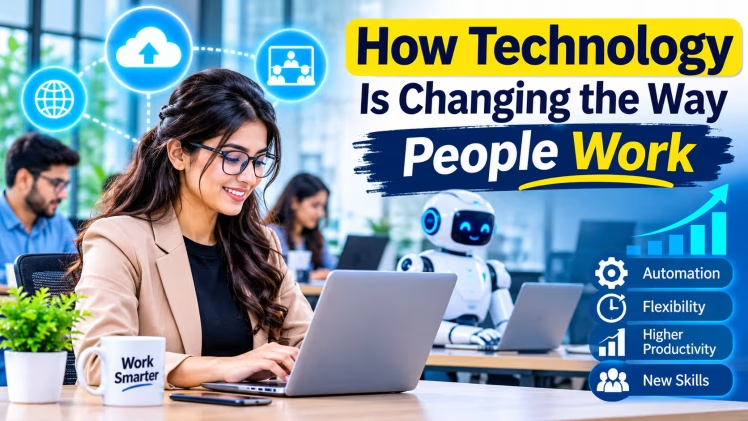
Work has changed dramatically because of digital technology. Employees can collaborate across countries, attend virtual meetings, manage projects online, share documents through cloud platforms, and communicate instantly.
For freelancers and small businesses, technology has created opportunities that were difficult to imagine a generation ago. A person with a computer and internet connection can potentially work with clients in different parts of the world.
Artificial intelligence and automation are adding another layer to this transformation. Repetitive tasks can increasingly be handled by software, allowing people to spend more time on creative, analytical, or strategic work.
However, technological change can also create uncertainty. Some job roles may shrink as automation becomes more capable, while new positions emerge around AI, cybersecurity, data, software development, digital marketing, and other fields.
The solution is not to fear technology but to keep learning.
| Technology | Workplace Impact |
|---|---|
| Cloud computing | Easier remote collaboration |
| Video conferencing | Global communication |
| AI tools | Faster repetitive tasks |
| Project software | Better organization |
| Automation | Improved efficiency |
| Digital payments | Easier business transactions |
The modern workplace rewards adaptability. A person who learns how to use new digital tools effectively can often improve productivity without necessarily working longer hours.
TechHopes can play a role here by highlighting useful technologies while also explaining their limitations. The best technology is not always the newest one; it is the one that solves a real problem efficiently.
Technology, Education and the New Learning Experience
Education is another area where technology has created major changes. Students can now access online courses, digital libraries, educational videos, interactive applications, language-learning platforms, and AI-assisted study tools.
This has made learning more flexible. A student no longer has to depend entirely on a physical classroom to access educational material. Someone living far away from a major educational center can still learn from experts and institutions around the world.
Technology can also support personalized learning. Digital platforms can help learners practice topics at their own pace, revisit difficult concepts, and receive immediate feedback.
However, technology does not automatically create better education. Too much screen time, unreliable information, distractions, and overdependence on automated tools can create new problems.
Students need to learn how to evaluate information rather than simply consume it. This is especially important in an era when AI can generate convincing but inaccurate content.
The strongest educational model may therefore combine human teachers with digital technology. Teachers provide context, encouragement, judgment, and personal guidance, while technology provides accessibility and additional learning resources.
For Tech Hopes, this is an important area because the future of technology is ultimately connected to the people who understand how to use it.
Technology should not replace curiosity. Ideally, it should make curiosity easier to pursue.
Read More: Techslassh com Guide: Features, Services, Benefits & How it Works
Digital Entertainment and the Changing Consumer Experience
Entertainment has become increasingly digital. Streaming platforms, online gaming, social media, short-form video, podcasts, music applications, and creator platforms have changed how people spend their free time.
The traditional idea of entertainment involved fixed schedules and physical media. Today, users often expect content to be available whenever they want it.
Gaming is another major technology-driven industry. Modern games combine powerful graphics, online multiplayer systems, digital communities, and increasingly sophisticated storytelling.
Social platforms have also transformed ordinary users into creators. A person with a smartphone can record a video, edit it, publish it, and potentially reach audiences around the world.
This democratization of content creation is one of the most interesting outcomes of modern technology. It has created opportunities for creators, musicians, educators, entrepreneurs, and entertainers.
At the same time, users face challenges such as excessive screen time, addictive design patterns, misinformation, and low-quality content.
A technology-focused perspective should therefore examine both sides. Digital entertainment can be useful, enjoyable, and creatively rewarding, but users benefit from maintaining control over how much time they spend online.
TechHopes can explore this changing entertainment landscape by focusing on the technology behind these experiences as well as their practical impact on users.
The Future of TechHopes: What Could Technology Look Like Next?
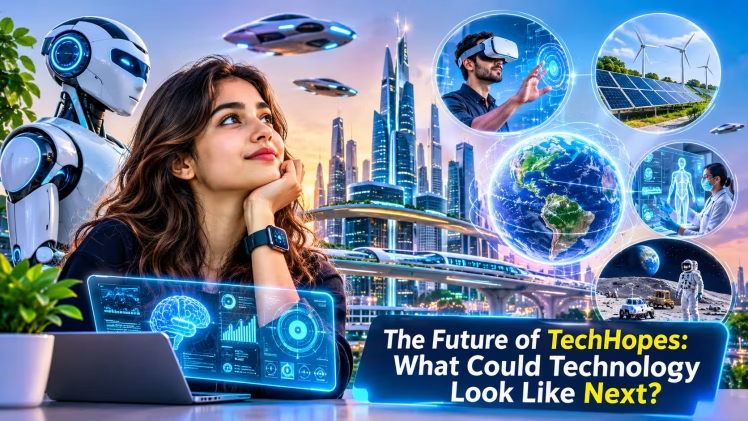
Predicting the future of technology is difficult. Many predictions fail because innovation rarely follows a perfectly straight path. Nevertheless, several trends are likely to remain important.
Artificial intelligence will probably become more deeply integrated into software, smartphones, business systems, education, and creative tools. Connectivity will continue improving, while smart devices may become more closely connected with one another.
Wearable technology could become more useful as sensors improve. Robotics may expand into areas such as logistics, manufacturing, healthcare support, and domestic applications. Meanwhile, cybersecurity will become even more important as the number of connected devices increases.
Another important trend will be the growing demand for sustainable technology. Consumers and businesses are increasingly interested in energy efficiency, repairability, recycling, and responsible resource use.
The future of technology will therefore not be defined only by speed and power. Practicality, privacy, sustainability, accessibility, and reliability will also matter.
| Future Trend | Possible Direction |
|---|---|
| AI | More personalized digital tools |
| Robotics | Wider automation |
| Wearables | More health and productivity features |
| Smart homes | Better device integration |
| Cybersecurity | Stronger identity protection |
| Green technology | Greater efficiency |
| Connectivity | Faster digital experiences |
The real opportunity for Tech Hopes is to remain focused on what these developments mean for ordinary people. Technology news can be overwhelming, but useful technology information should make the digital world easier to understand.
Why a Human Perspective Still Matters in Technology
Technology may be powered by machines, algorithms, processors, and data, but its purpose remains human. Every major technological development ultimately affects how people live, work, communicate, learn, create, and make decisions.
That is why a human perspective is important when discussing technology.
A good technology article should not simply repeat product specifications or describe the latest trend. It should ask practical questions. Does this technology solve a genuine problem? Is it affordable? Is it secure? Is it easy to use? Does it save time? What are the possible disadvantages?
These questions help readers make better decisions.
TechHopes can be understood through this broader perspective. The concept is not simply about celebrating technology. It is about looking toward the future while staying connected to real-world needs.
The best technological innovations are often the ones that quietly make life easier. A faster process, safer account, better learning tool, more accessible service, or simpler way to communicate can have a greater impact than a flashy product that attracts attention for only a few weeks.
Technology will continue changing, but the need for trustworthy information will remain.
Readers need explanations that are clear, balanced, and practical. They need technology content that sounds like it was written for people rather than search engines.
That is ultimately where a humanized approach becomes valuable.
Frequently Asked Questions About TechHopes
What is TechHopes?
TechHopes can be understood as a technology-focused concept centered on innovation, digital trends, emerging technologies, and the future of the technology industry. It can cover subjects such as artificial intelligence, smartphones, cybersecurity, software, digital services, and other developments that influence modern life.
Why is TechHopes relevant in today’s digital world?
Technology is changing quickly, and people need reliable information to understand new products, services, and digital trends. TechHopes reflects the growing interest in understanding how technology can create opportunities while also addressing challenges such as privacy, security, and responsible use.
What topics can be covered under TechHopes?
A broad technology platform can cover AI, smartphones, computers, applications, cybersecurity, cloud computing, digital payments, online business, gaming, emerging technologies, software updates, and technology-related lifestyle trends.
How is artificial intelligence connected to TechHopes?
Artificial intelligence is one of the most important areas of modern technology. AI can support writing, research, design, coding, education, business automation, and many other activities. Understanding both its advantages and limitations is important for responsible technology use.
Is TechHopes only about smartphones and gadgets?
No. Technology is much broader than smartphones and gadgets. A comprehensive technology perspective can include artificial intelligence, cybersecurity, education, cloud computing, automation, digital businesses, online entertainment, robotics, connectivity, and future innovations.
Why is cybersecurity important for technology users?
As people increasingly use online accounts and digital services, protecting personal information becomes essential. Strong passwords, multi-factor authentication, software updates, secure browsing habits, and awareness of phishing attempts can help users reduce common digital security risks.
How is technology changing the workplace?
Technology allows people to collaborate remotely, automate repetitive tasks, manage projects digitally, communicate across borders, and access cloud-based tools. AI and automation are also changing job requirements, making continuous learning increasingly valuable.
Can technology improve education?
Yes. Digital learning platforms, online courses, educational applications, video lessons, digital libraries, and AI-assisted tools can make education more accessible and flexible. However, technology works best when combined with critical thinking and guidance from qualified educators.
What does the future of technology look like?
The future is likely to involve deeper AI integration, smarter connected devices, improved automation, advanced cybersecurity, robotics, wearable technology, and more efficient digital infrastructure. Sustainability and privacy are also expected to become increasingly important considerations.
Why should people stay informed about technology?
Staying informed helps people make better decisions about the devices, applications, services, and digital tools they use. It also helps individuals recognize opportunities while understanding potential risks associated with rapidly changing technology.
Final Thoughts
TechHopes represents an interesting way of looking at the technology landscape through the ideas of innovation, opportunity, curiosity, and future possibilities. From artificial intelligence and smartphones to cybersecurity, education, remote work, entertainment, and emerging technologies, the digital world is changing at an extraordinary pace.
But technology should never be judged simply by how advanced it appears. Its real value comes from how effectively it solves problems and improves experiences.
For readers, the smartest approach is to remain curious without becoming blindly dependent on every new trend. Learn what a technology does, understand its benefits, consider its limitations, and decide whether it actually fits your needs.
The future will undoubtedly bring technologies that are difficult to imagine today. Some will succeed, some will disappear, and others will quietly become part of everyday life.
The most important thing is not predicting every invention correctly. It is developing the ability to understand change.
